
Matthew Kerolos
CEO
- Two-time founder. Left UVA to build CloudStation.
- Co-founded CloudStation, which places and runs unattended retail machines.
- Hosts an interview series with company executives.

BREE turns stores AI-ready, or fully AI-run, using what they already have. We add cameras, locks, and access control to the coolers already on the floor.
11 slides · no signup · raising $100K pre-seed
Plate IMount Rainier after sunset. The light is gone. The mountain is still there.
We add cameras, locks, and access control to the coolers and shelves already on the floor. The door is the whole interface. No app to install and no line on the way out.
Campus coolers come first, and the same flow extends to convenience store shelves.
The shopper taps a campus ID, a card, or a phone at the cooler or shelf. That's the only thing they have to do.
It opens for that shopper only, for that session only. Everyone else still sees a locked door.
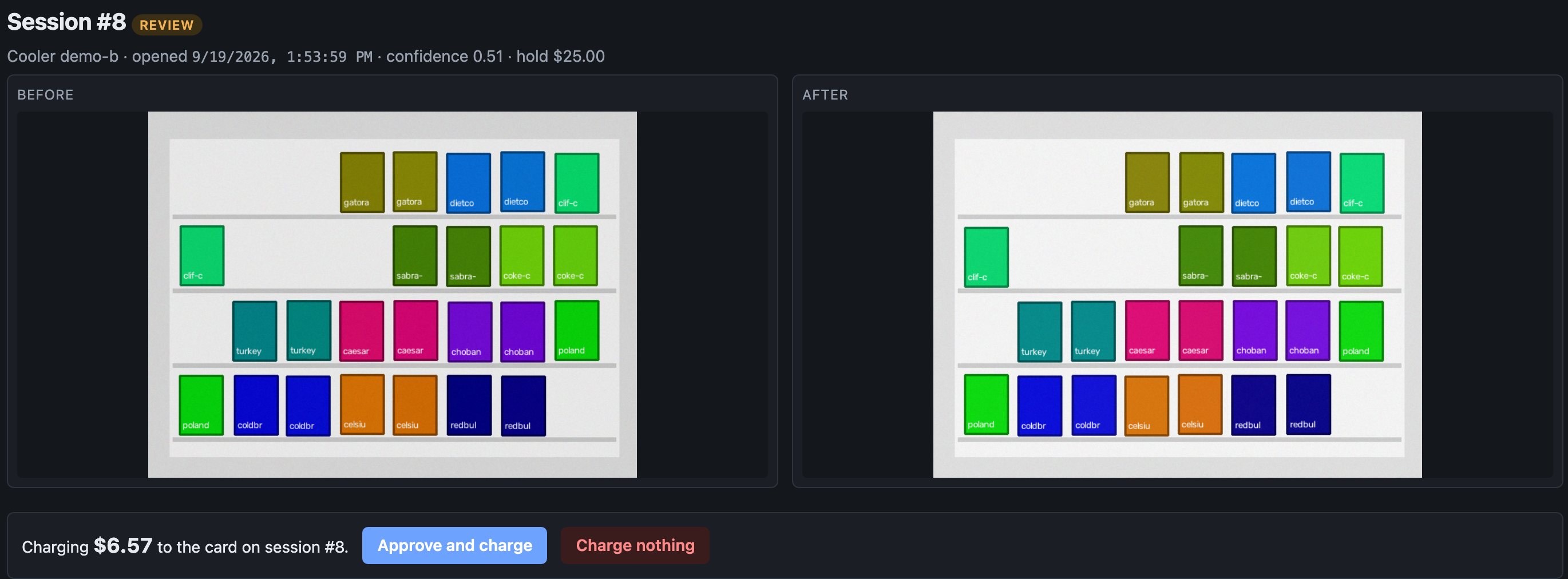
Cameras inside the cooler see which items leave the shelf. The door relocks when it closes.
The payment method on file is charged automatically. If the system isn't sure what left, a person checks the basket first.
The product is still on the shelf and the lights are still on. Nobody is there to take the money. Staffing that gap is a shift a small owner can't carry.
The 14 and 10 hour split and the $15 wage are illustrative assumptions, not measurements.
A store is an open room with thousands of products and many people moving at once. A cooler is a closed box with fixed cameras, a fixed shelf plan, and one authenticated shopper at a time.
| Aspect | Whole store | One cooler door |
|---|---|---|
| Shoppers | Several at once, moving | One, the one who authenticated |
| Cameras | Overhead, re-aimed as shelves move | Fixed inside one door |
| Items | Every product on the floor | One shelf plan |
| Exit | A door to the street | A door that relocks |
A buyer finds those prices in one search, so here is the answer.
The cooler, the compressor, the shelving, and the floor space stay put and keep earning. A new AI cooler is a second box, and small stores don't have somewhere to put it.
The price is per location. The first door carries the computer and the install trip. Each added door is mostly cameras and a latch.
The priced parts for one cooler door come to $463.77. The rest pays for the install, the uptime, and the support.
The sticker is not the whole bill either. The $7,950 Stockwell listing also carries 7.5% of monthly sales and 5.95% per transaction.

Plate IILake Tekapo, late in the day. Nobody on the shore.
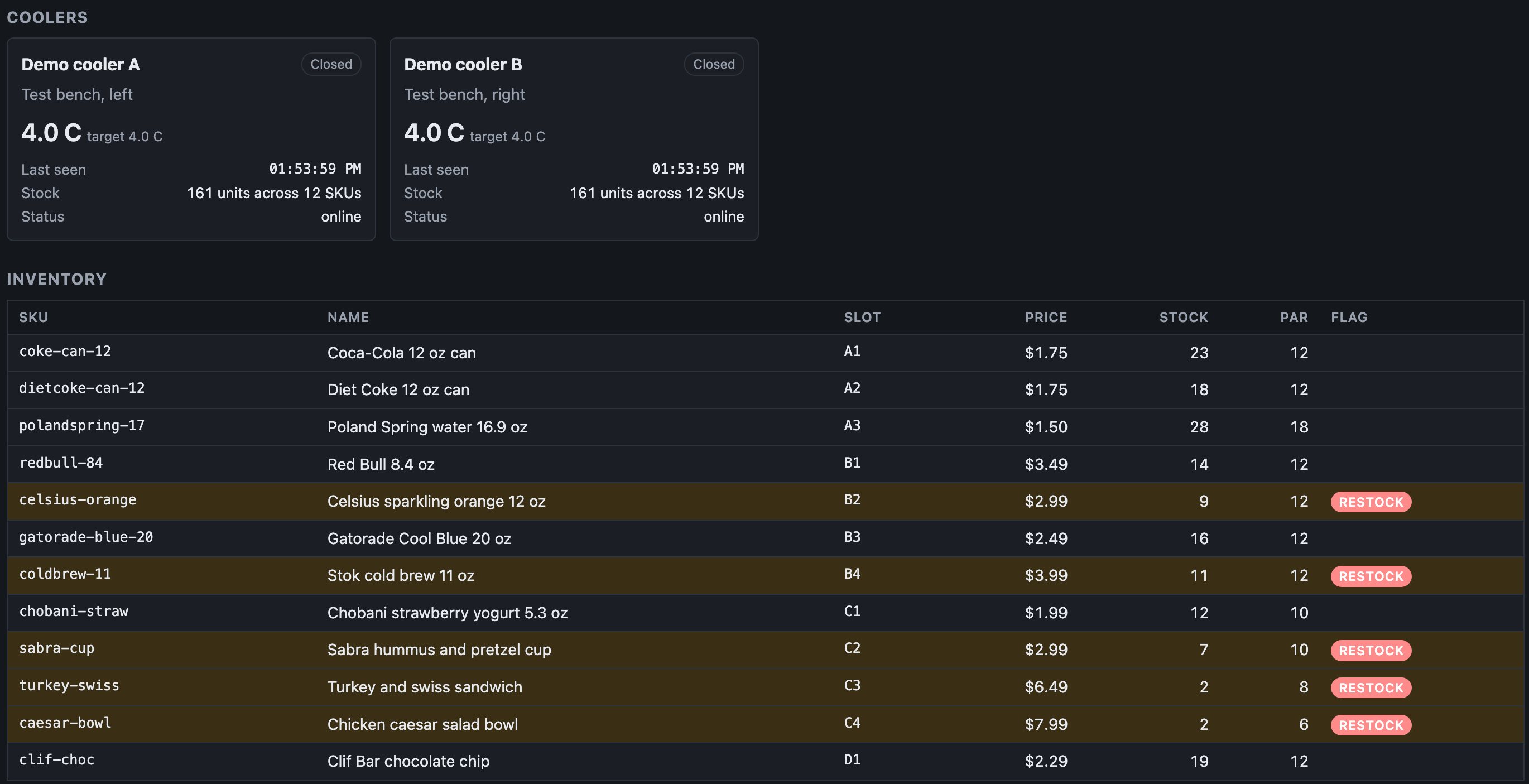
Authentication, the lock, the basket, the charge, and the review step are written and tested. The full flow runs on mock hardware.
Priced per cooler door
$463.77
Fitted to the door the store already owns. It stays shut until someone authenticates.
One tap opens one session. Every open door has an account behind it.
Priced per location, alongside the install.
One dining office decides for a whole campus, which makes it the right place to prove the flow. The shelf version follows for convenience stores.
US convenience stores.NACS, 31 Dec 2025
95,672 · 63%of them belong to companies with 10 or fewer stores. Nobody in that group has a night manager to spare.
Retrofittable coolers, counted bottom up. $3.96B at $10K per location.BREE estimate
Coolers reachable first: campuses, community hospitals, and primary airports.BREE estimate
US institutions enrol more than 5,000 students.NCES, Fall 2021
The market count covers hardware and install only. It assumes three coolers per campus and one per site elsewhere.
CEO

CTO
CloudStation, co-founded by BREE's CEO
The person selling BREE has sold into this channel before.
Investors: read the deckThe $100K pre-seed pays for the first kits, 3 to 5 campus pilots we install and run ourselves, and 90 days of real data from each site.
Cameras, latch, sensors, and the edge computer, fitted to real coolers.
Installed and run by us.
Test wedgeDetection on real product, review rate, shrink, uptime, and install hours, from each site.
Phase 2 brings the same flow to the shelves.
Amazon pulled Just Walk Out from most of its own large US grocery stores in 2024 and kept licensing it. A grocery store is an open room with thousands of products and a crowd. A cooler is a closed box with fixed cameras and one authenticated shopper. That is a much smaller problem to solve.
We will publish a detection number once we have measured it on real shelves, with the product count and the test protocol printed next to it. Until then, any basket the system is not sure about goes to a person before a card is charged.
The door stays locked until a shopper authenticates, so every open door has an account behind it and the frames from that session are kept.
Age-restricted items stay behind the counter for now. The first coolers carry drinks and snacks.
The cameras sit inside the cooler and point at the shelves, not at the room.
Detection is designed to run on a computer inside the cooler, so a session does not depend on a round trip to a data centre.
We install it ourselves. The cooler, shelving, and compressor stay in place, and the kit fits onto them.
The first kits, 3 to 5 campus pilots that we install and run ourselves, and 90 days of real data from each site.

The 11-slide deck covers the product, the market, and what $100K buys.
11 slides · no signup · raising $100K pre-seed
Plate IIIAlpine ridges in the first sun.